
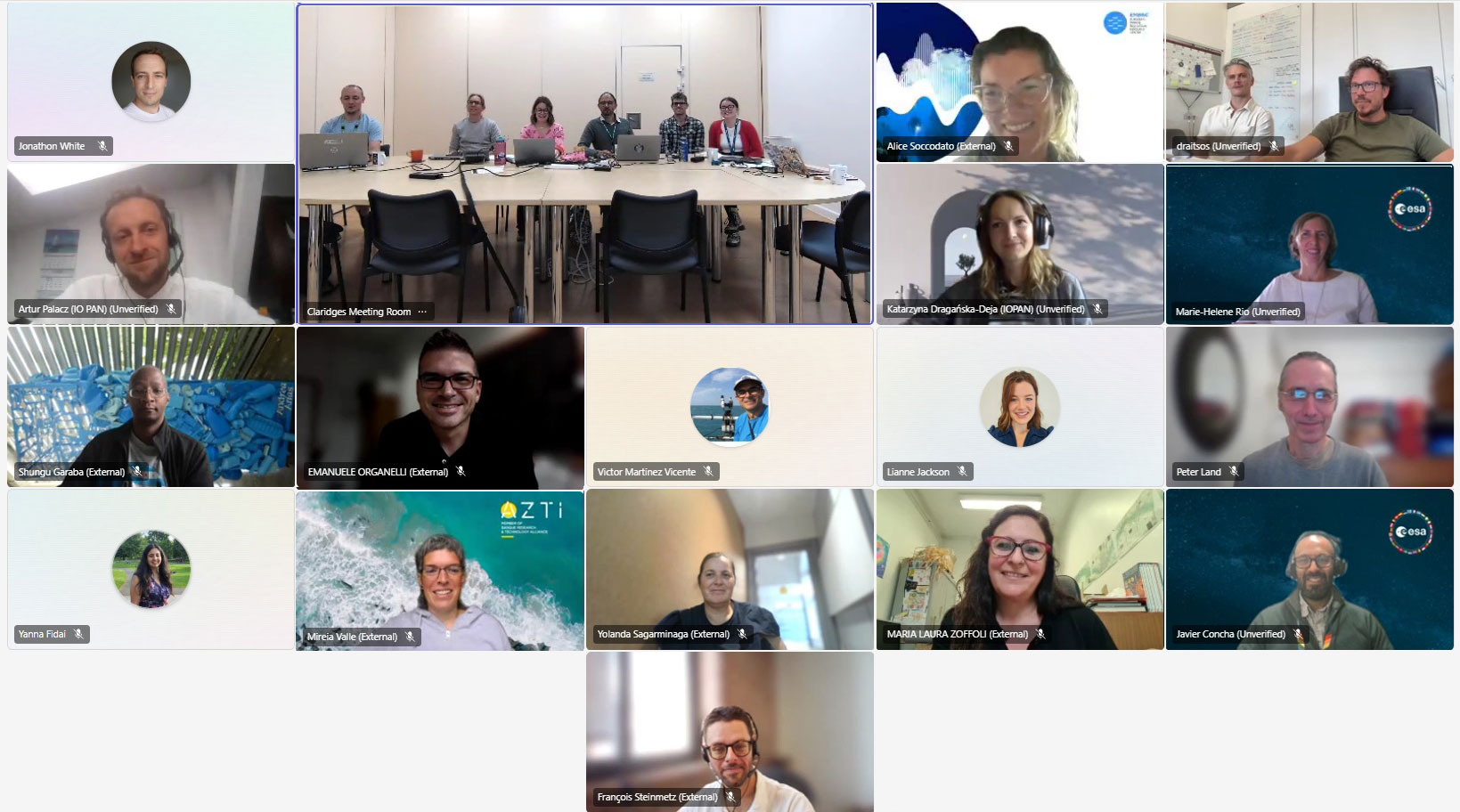
Led by Plymouth Marine Laboratory, with partners across Europe, PhytoDiverse will pioneer the next generation of space-based biodiversity monitoring, focusing on phytoplankton, which form the base of marine food webs and drive key climate processes.
With marine biodiversity under increasing pressure from climate change and human activity, the project aims to unlock powerful new tools to understand how ocean life is changing at regional and global scales.
At the heart of PhytoDiverse is the use of cutting-edge satellite technology, including ESA’s Sentinel‑2 and Sentinel‑3 missions and NASA’s new hyperspectral PACE mission, to detect subtle differences in phytoplankton pigments, functional traits, and community composition from space.
The project will also integrate large in situ datasets, including those from the recent ESA HyperBOOST project to calibrate and validate new satellite algorithms. The resulting products will feed into Essential Biodiversity Variables (EBVs), climate‑quality datasets, and ocean health indicators such as long‑term trends, bloom phenology, and extreme events.
Three case study sites across Europe will serve as real-world testbeds:
- North Eeast Atlantic – assessing long-term shifts in plankton communities.
- Northern Adriatic Sea – analysing highly dynamic coastal blooms influenced by river systems.
- European Arctic – detecting ecological change in one of the fastest‑warming regions on Earth.
PhytoDiverse will also support the joint ESA-EC collaboration on Ocean Health and Biodiversity, collaborating with a number of other projects in this related area of research as well as contributing directly to evidence‑informed policymaking, supporting international biodiversity frameworks, including the Convention on Biological Diversity. A scientific roadmap produced at the end of the project will guide European efforts to build an integrated, satellite‑enabled biodiversity monitoring system for the next decade.
With climate change accelerating and marine ecosystems under increasing strain, PhytoDiverse represents a major step forward in Europe’s ambition to observe, and ultimately protect life in the ocean from space.